When Can I Eat Normal Food After Wisdom Teeth Removal
Are any foods safe to eat anymore? Here's the truth
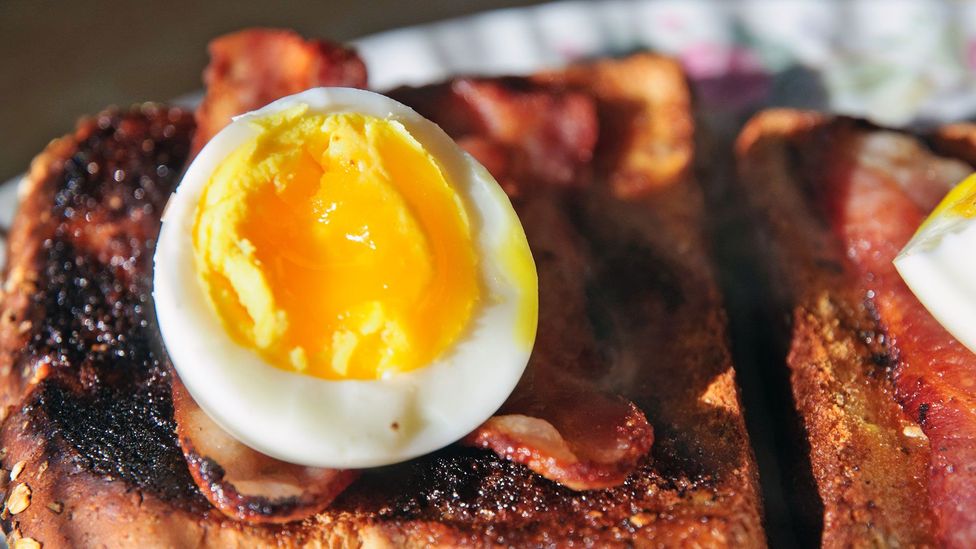
Is bacon actually equally bad for you as cigarettes? Will java give you a heart set on? Practise wheat-eaters suffer "brain fog"? BBC Future examines the foods, the fears – and the facts.
F
Food was in one case seen equally a source of sustenance and pleasure. Today, the dinner table can instead begin to feel similar a minefield. Is the bacon on your plate culinary asbestos, and volition the wheat in your toast give you "grain encephalon"? Even the bubbles of gas in your fizzy drinks have been considered a hazard.
Worse still, the advice changes continually. Every bit TV-cook Nigella Lawson recently put it: "You can guarantee that what people call up will be good for you this year, they won't next year."
This may be somewhat inevitable: evidence-based health advice should be constantly updated equally new studies explore the nuances of what we eat and the furnishings the meals take on our bodies. But when the media (and ill-informed health gurus) exaggerate the results of a report without providing the context, it tin can lead to unnecessary fears that may, ironically, push you towards less healthy choices.
We've tried to cutting through the defoliation by weighing up all the available evidence to date. You may exist pleased to learn that many of your favourite foods are not the ticking time flop you take been led to believe.
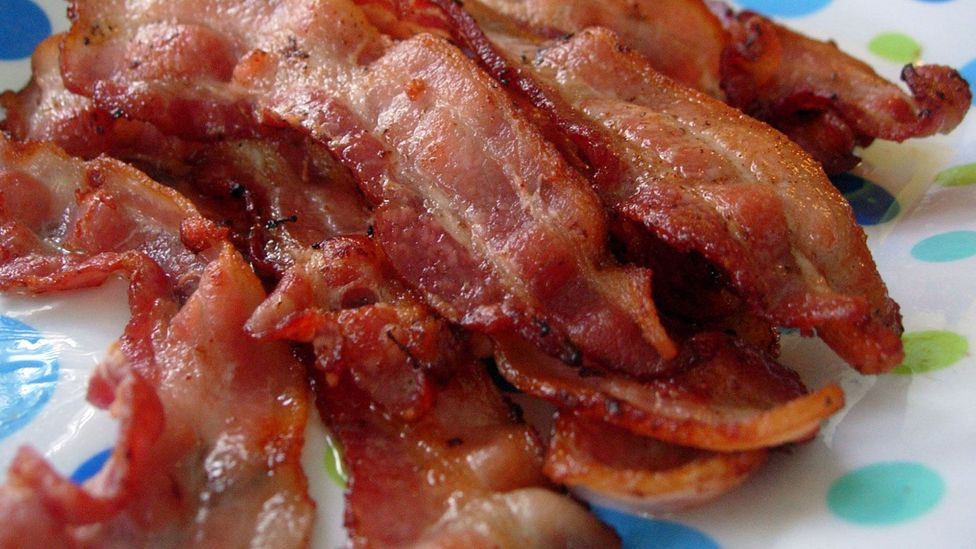
The WHO warns against bacon, but how worried should you exist? (Wendy/Flickr/CC BY-ND ii.0)
The food: Salary
The fear: Processed meats are as dangerous every bit cigarettes.
The facts: While the World Wellness Organisation has appear overwhelming prove that bacon (and other kinds of processed meat) can contribute to colorectal cancer, the existent dangers are not quite as worrying as the subsequent headlines would have us believe.
As Cancer Inquiry U.k. points out in an acute weblog, colorectal cancer is itself relatively rare. If y'all eat barely whatever meat, in that location is a five.6% take a chance of developing the disease over your lifetime; even if you lot pig out on bacon and ham every day, it only rises to almost 6.half dozen%. In other words, for every 100 people who end eating bacon, only ane volition have avoided cancer. To put that in perspective, consider the figures for tobacco: for every 100 smokers who requite up, 10-15 lives may be saved. The ii are inappreciably comparable.
Nevertheless, you lot may want to reconsider a 20-rashers-a-day addiction. The UK regime advises that an boilerplate of 70g a day is still healthy – about three rashers, or two sausages.
In a nutshell? The odd English breakfast may not do you as much good as a bowl of granola – but nor is information technology gastronomic asbestos.

Should y'all avoid a daily loving cup? (Guwash999/Flickr/CC BY 2.0)
The food: Coffee
The fear: Our caffeine addiction volition drive us to a heart assail.
The facts: In that location is very fiddling evidence that a cup of Joe will send you to an early grave; in fact, the opposite may be true. In 2012, the New England Journal of Medicine reported on the health of 400,000 Americans over the course of 13 years. The scientists plant that people who drank between three and vi cups a solar day were around ten% less likely to die during the 13-year period, with lower rates of heart disease, stroke, diabetes and infections. Considering a string of studies examining the wellness of more than than a one thousand thousand individuals, a review in 2022 painted a similar picture show: people who drank four cups a day were around 16% less likely to die at any once.
Notation that these were but observational studies. Although they tried to account for other factors, at that place's no style of knowing if the coffee itself was protecting the centre, or if there'due south another, hidden, explanation. Perhaps healthier people are but more probable to exist drawn to coffee. Merely as "addictions" go, it's pretty harmless.
In a nutshell? It's probably non the elixir of life that some claim, merely based on this evidence, y'all can at least savour that morning espresso with impunity.
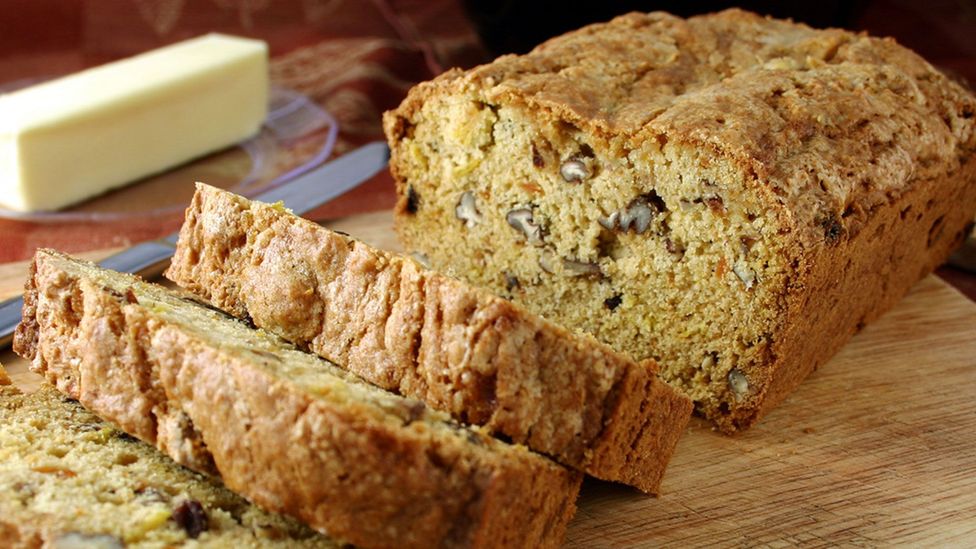
We've been eating wheat for 10,000 years (Glory Foods/Flickr/CC Past two.0)
The nutrient: Wheat
The fear: And then-called "grain brain" could contribute to Alzheimer's illness.
The facts: Outset things kickoff: a very small number of people – around 1% of the population – exercise accept a genuine gluten allergy known equally celiac disease, that can damage their intestines and lead to malnutrition. Others may not endure from celiac disease, but they may instead be "sensitive" to wheat; although they don't suffer symptoms if they but eat a small amount, they may experience some discomfort if they eat too much bread.
Explanations for this "non-celiac gluten sensitivity" are controversial: rather than the gluten in wheat specifically, it may instead be caused by a range of sugars and proteins that are also found in many other foods, including fruit and onions. If then, but cutting wheat would not relieve the symptoms.
Then there are the people going gluten-free even without experiencing definite symptoms at all, because wheat itself is seen every bit being toxic. As Peter Green at Columbia Academy commented recently: "People who promote an anti-grain or anti-gluten agenda sometimes cite our work in celiac illness, drawing far-ranging conclusions that extend well beyond bear witness-based medicine." I popular claim, for instance, is that wheat-based foods trigger inflammation throughout the torso, which could contribute to "brain fog" and increase the take a chance of serious weather like Alzheimer's. Only while diets heavy in carbohydrates and sugars may, over time, lead to neural damage, whole wheat is still better than other energy sources, such as potatoes, since it releases its sugars more slowly.
In a nutshell? Humans have been eating wheat for at least 10,000 years – and unless you have been tested for an allergy, at that place seems little reason to finish until we have far more than evidence.
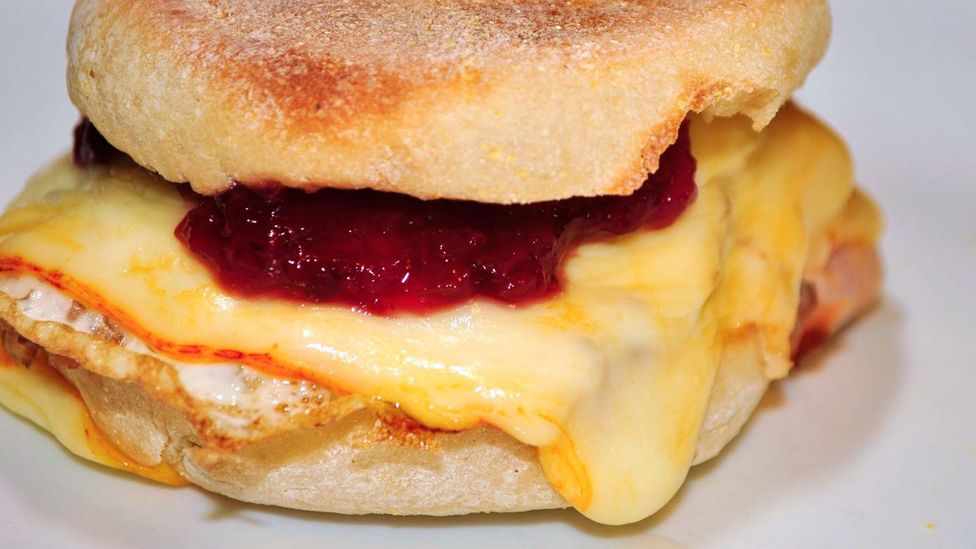
Cheese is bad for your heart, right? Not and then fast (jeffreyw/Flickr/CC Past two.0)
The food: Butter, cheese and full-fat milk
The fearfulness: Dairy products volition clog up your arteries and contribute to middle illness.
The facts: For decades, the bulletin has been simple: "saturated" fats from cheese, butter, and full-fat milk will raise the cholesterol in your claret and put yous in danger of a heart attack. For this reason, many wellness organisations had encouraged u.s.a. to lubricate our diets with margarine and vegetable oils, replacing the saturated fats with "poly-unsaturates" typically establish in the (famously healthy) Mediterranean diet.
Nonetheless over the last few years, we've seen a stream then a torrent of deeply puzzling findings that contradict the accustomed wisdom. Taking all the show into account, i major review in the Annals of Internal Medicine recently concluded that "high levels of saturated fat intake had no effect on coronary illness". Again, these were only observational studies, but one team decided to put information technology to a test with a advisedly planned intervention, feeding their participants 27%-fat Gouda cheese every twenty-four hour period for eight weeks. At the finish of the trial, they had lower cholesterol than controls asked to stomach a nil-fat alternative.
The oddest finding? Despite the fact that full-fat milk and butter are packed with calories, people eating full-fatty dairy were no more probable to exist obese than those drinking semi-skimmed milk; 12 separate studies have in fact found them to be leaner. Information technology'southward possible that the fat itself could help regulate the metabolism, pregnant that you lot burn off free energy more than efficiently; or information technology could be that full-fat dairy keeps our hunger locked away for longer, making u.s.a. less likely to make full up with unhealthy snacks later on.
In a nutshell? Nosotros withal don't understand why, but "full-fat" may be the new "skinny".
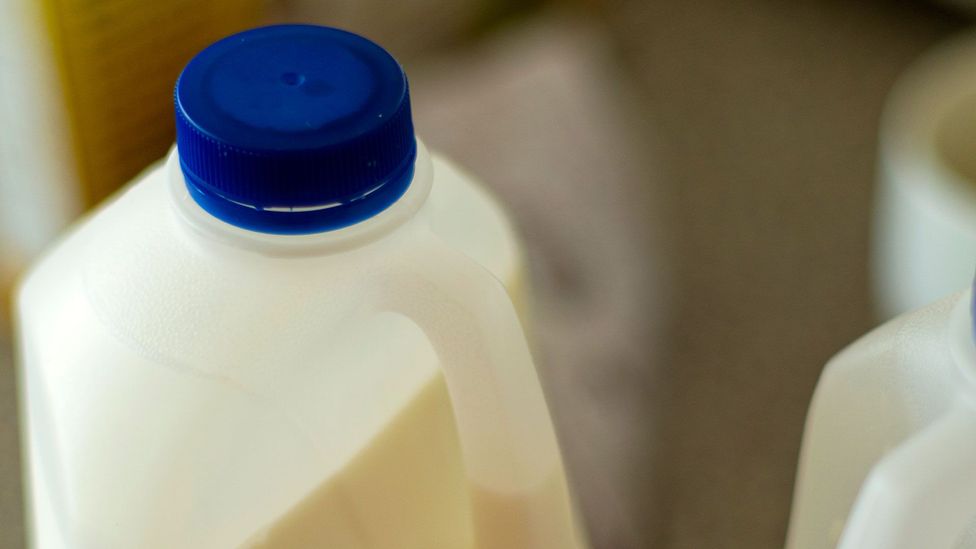
Pasteurisation of milk has many benefits (Intrinsic-Image/Flickr/CC By-NC-ND two.0)
The food: Pasteurised milk
The fright: Pasteurisation could contribute to eczema, asthma and other immune disorders.
The facts: It's not merely full-fat milk that has come under burn down. A common supposition is that the more "natural" a food is, the healthier it must be, and this has led some to shun pasteurised milk. Proponents claim that pasteurisation damages many of the useful nutrients in milk, including proteins that may protect the states from allergies. The process of pasteurisation, they believe, likewise kills "friendly" microbes in the milk that could add together to the microbiome in our gut, aiding digestion, strengthening the immune system and even protecting against cancer.
Many doctors, however, believe this is premature. The mild heating involved in pasteurisation should exit virtually all the nutrients intact, and information technology seems unlikely that the friendly leaner in raw milk will bring many benefits: its colonies would need to exist thousands of times bigger for plenty of the bacteria to survive digestion and brand their fashion to the intestine. And although there is some tentative prove that people who drank raw milk as children tend to accept fewer allergies, it's hard to be sure this was caused by the milk itself, and not just the fact that many of these children more often than not grew upward on farms. Living among so many animals, their trunk may have been trained to bargain with allergens at a young age, making them less likely to endure as adults. What's more, drinking raw milk could be potentially dangerous: we pasteurise the beverage for good reason, to impale microbes that could cause serious disease, like tuberculosis, Salmonella and East coli.
In a nutshell? Earlier you risk a nasty infection, you might want to wait for the evidence to match the extravagant claims.
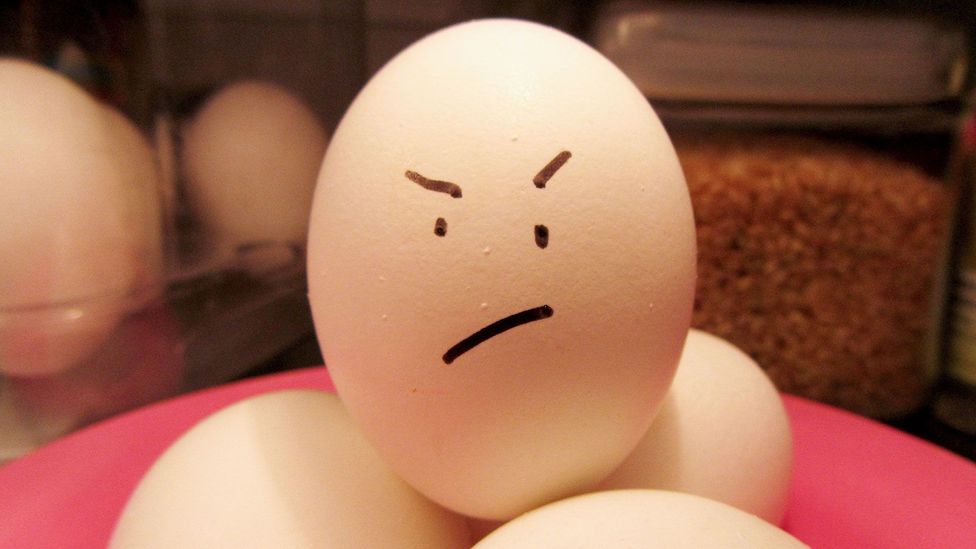
How many eggs is too many? (Tom Fassbender/Flickr/CC BY-ND 2.0)
The nutrient: Eggs
The fear: A middle-attack in a shell.
The facts: Similar full-fatty milk, eggs were once thought to cake our arteries in cholesterol and increase the risk of heart disease. There may be some truth in these claims, but provided you are otherwise good for you, eating up to 7 eggs a week seems to come with no ill-consequences.
In a nutshell? As well the risk of flatulence and constipation, eggs are a safe and valuable source of poly peptide.
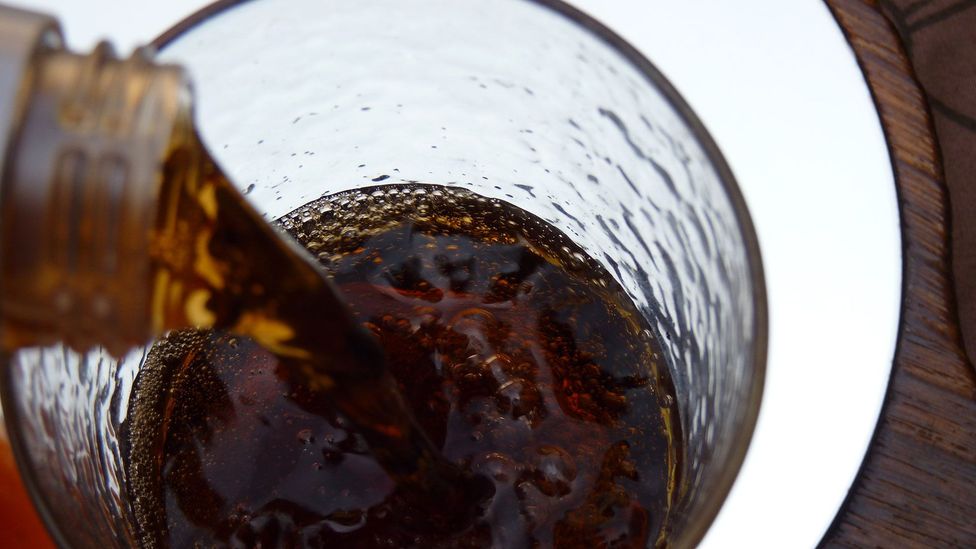
Many fear the wellness effects of sweeteners in diet drinks (Ze'ev Barkan/Flickr/CC By 2.0)
The nutrient: "Diet" soft drinks
The fright: Artificial sweeteners can contribute to cancer take chances.
The facts: We already know that too much carbohydrate leads to obesity, diabetes and centre disease – but what about the artificial sweeteners nosotros add to "diet" drinks to try to lessen the affect? One mutual fear is that they promote the growth of tumours. But as Claudia Hammond recently explained on BBC Future, the risks may have been exaggerated; a vast study conducted by the U.s.a. National Cancer Institute found no increase in the risk of brain cancer, leukaemia or lymphoma in people consuming aspartame, the most common sweeteners, and the same seems to be true for other sugar alternatives. In that location is, however, a chance that they might contribute to glucose intolerance, and blazon ii diabetes – though it has withal to be proven. (Incidentally, Hammond has also punctured the idea that the bubbles in soft drinks are themselves a hazard, debunking claims that information technology could impairment your stomach and weaken your bones.)
In a nutshell? Artificial sweeteners may be the lesser of two evils – they may carry some risks, merely are notwithstanding healthier than the full-sugar alternatives.
David Robson is BBC Future'south feature author. He is @d_a_robson on Twitter.
Follow us on Facebook, Twitter, Google+, LinkedIn and Instagram .
Source: https://www.bbc.com/future/article/20151029-are-any-foods-safe-to-eat-anymore-heres-the-truth

Post a Comment for "When Can I Eat Normal Food After Wisdom Teeth Removal"