Can You Stimulate the Neuron Again Right After Firing It
Neuronal Action Potential -
Refractory Periods
As mentioned in the last section, opening of the Na+ channels, spontaneously and quickly leads to their inactivation. At the peak of the activity potential, all Na+ channels get inactivated. When Na+ channels are inactivated, they cannot be immediately opened again (run into figure on Na+ channel inactivation). Recovery from inactivation is a time- and voltage-dependent procedure, and total recovery usually takes most iii-4 ms. Therefore, it takes most 3-four ms for all Na+ channels to come out of inactivation in gild to be ready for activation (opening) again. The period from the initiation of the action potential to immediately subsequently the summit is referred to as the absolute refractory period (ARP) (see Figs. one and ii). This is the time during which another stimulus given to the neuron (no affair how strong) will not lead to a second action potential. Thus, because Na+ channels are inactivated during this time, additional depolarizing stimuli do not lead to new action potentials. The absolute refractory menstruum takes about 1-2 ms.

Figure one. Accented and relative refractory periods.
During the accented refractory period, a second stimulus (no thing how strong) will not excite the neuron. During the relative refractory flow, a stronger than normal stimulus is needed to arm-twist neuronal excitation.
Later the accented refractory catamenia, Na+ channels begin to recover from inactivation and if potent enough stimuli are given to the neuron, information technology may respond again by generating activeness potentials. However, during this time, the stimuli given must be stronger than was originally needed when the neuron was at residual. This situation will continue until all Na+ channels have come out of inactivation. The period during which a stronger than normal stimulus is needed in order to elicit an activity potential is referred to as the relative refractory period (RRP). During the relative refractory period, since p M remains above its resting value (see figure on timecourse of p K during the activity potential), continued One thousand+ menses out of the prison cell would tend to oppose any depolarization caused by opening of Na+ channels that have recovered from inactivation.
Considering the excitability of the neuron post-obit an action potential, it tin can be seen that the neuron is not excitable at all during the absolute refractory period, however, neuronal excitability recovers in a time-dependent (and also voltage-dependent) fashion follwoing the accented refractory flow (Fig. 2). As mentioned in a higher place, the menses immediately following the absolute refractory period until neuronal excitability is similar to that for a resting neuron is the relative refractory menstruation. If the neuron is stimulated with a stimulus strong plenty merely to bring a resting neuron to threshold, the neuron will merely answer when the relative refractory period is over (i.eastward., the neuron is back to its resting state). Howerver, during the relative refractory period, the neuron can exist excited if a stronger than normal stimulus is applied. The strength of the stimulus needed to excite the neuron during the relative refractory period is very high initially immediately following the end of the absolute refractory period, just decreases throughout the relative refractory period until information technology reaches that needed to excite a neuorn at rest (i.e., at the end of the relative refractory period (Fig. 3).
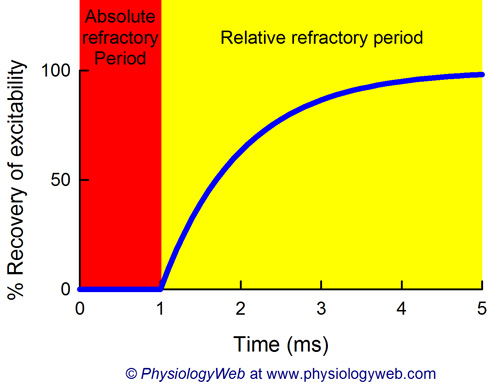
Figure 2. Recovery of neuronal excitability.
During the absolute refractory period, the neuron cannot exist excited to generate a 2d action potential (no matter how intense the stimulus). As Na+ channels begin to recover from inactivation, excitability is gradually restored. This recovery period is the relative refractory catamenia during which a stronger than normal stimulus is needed to initiate a new action potential.

Figure 3. Threshold stimulus strength required to arm-twist an action potential during the relative reftractory period.
No stimulus, no matter how potent, will bring the neuron to threshold during the absolute refractory menstruation. During the relative refractory period, the neuron tin be excited with stimuli stronger than that needed to bring a resting neuron to threshold. The strength of of the stimulus required is very loftier early in the relative refractory period and gradually becomes smaller throughout the relative refractory period as Na+ channels recover from inactivation and as Chiliad+ permeability returns to its resting level (see figure). At the finish of the relative refractory period, when the neuron is back to its resting state, the stimulus force is at the minimum level required to bring a resting neuron to threshold (dashed line).
In summary, inactivation of Na+ channels is solely responsible for the absolute refractory catamenia. Both Na+ aqueduct inactivation and greater than resting p M value are responsible for the relative refractory menstruum.
The absolute refractory period is responsible for setting the upper limit on the maximum number of action potentials that tin can be generated during any given time period. In other words, the absolute refractory period determines the maximum frequency of action potentials that can be generated at any point forth the axon plasma membrane. This action potential frequency, in turn, has important physiological implications for how the nervous system tin can reply to high-frequency stimuli, and also for the ability of the nervous organization to send high-frequency signals to effector organs when needed (see Frequency Coding in the Nervous System).
I final note nearly the refractory period is in order. As mentioned before, the numbers reported in these lectures for various physiological processes represent to what has been established to be the "norm" or the best-studied example of the process. Although we have reported the refractory period to be 3-4 ms long, it should be noted that the hyperpolarization phase can last upwardly to 15 ms in some neurons. In these neurons, therefore, the relative refractory catamenia is much longer.
Posted: Thursday, July 5, 2012
Last updated: Friday, September 25, 2015
Source: https://www.physiologyweb.com/lecture_notes/neuronal_action_potential/neuronal_action_potential_refractory_periods.html

Post a Comment for "Can You Stimulate the Neuron Again Right After Firing It"